
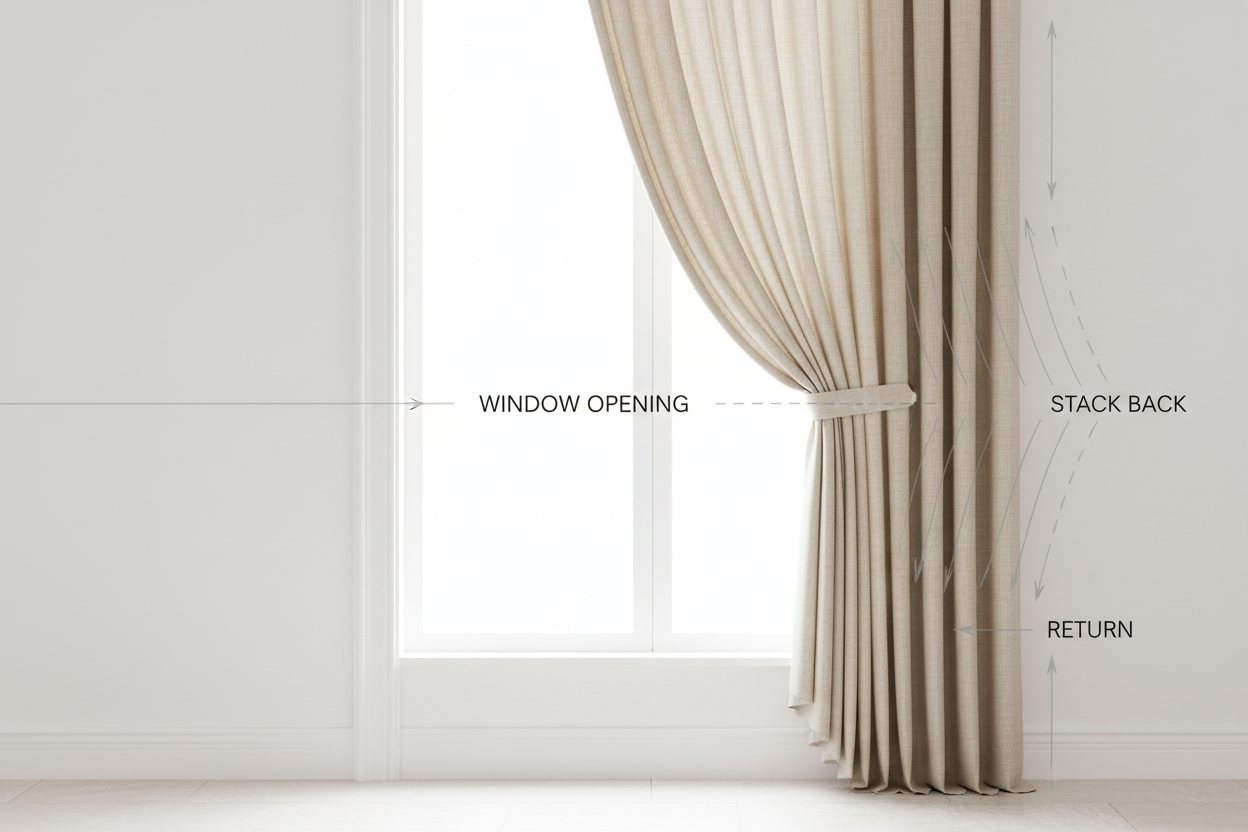
What Is Stack Back?
Stack back refers to the amount of space your curtains take up on the wall when they are fully open. When you pull your curtains to the sides, the gathered fabric doesn't disappear — it stacks up on either side of the window. That stacked fabric is the stack back.
Understanding stack back is essential for planning your window treatment correctly. If you don't account for it, your open curtains may cover part of the window, blocking light and making the room feel smaller than it should.
Why Stack Back Matters
The goal for most rooms is to have curtains that, when open, sit entirely on the wall beside the window — not overlapping the glass. This maximises natural light and makes the window appear larger.
To achieve this, you need to either:
- Mount the rod wide enough that the stack back falls on the wall, not the window, or
- Choose a fabric and header style with a smaller stack back
How Much Stack Back Should You Expect?
Stack back varies depending on three main factors:
1. Fabric Weight and Thickness
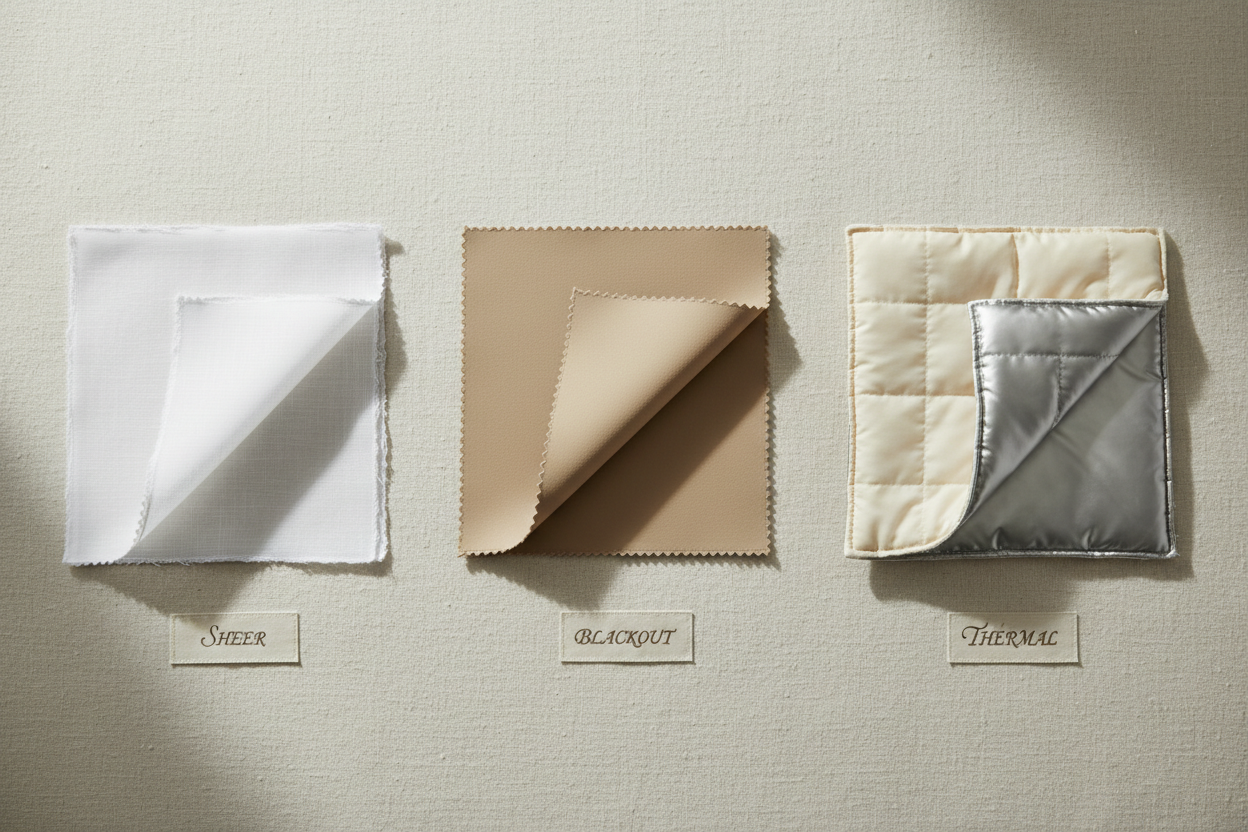
Heavier, thicker fabrics (velvet, interlined curtains) stack up more than lightweight ones (linen, cotton). A velvet curtain may have a stack back of 30–40cm per side, while a sheer panel might stack to just 10–15cm.
2. Fullness Ratio
The more fabric in your curtain (higher fullness), the more it will stack. A curtain with 2.5× fullness will have a larger stack back than one with 1.5× fullness.
3. Header Style
Pleated headers (pinch pleat, pencil pleat) tend to stack more compactly than eyelet or rod pocket styles, which can spread out more loosely.
A Simple Rule of Thumb
As a general guide, allow approximately 25–30% of the total curtain width for stack back — split across both sides. So for a curtain that is 300cm wide when closed, expect roughly 75–90cm of total stack back (about 37–45cm per side).
This is a starting estimate. Always check with your curtain maker for precise figures based on your specific fabric and construction.
How to Plan for Stack Back
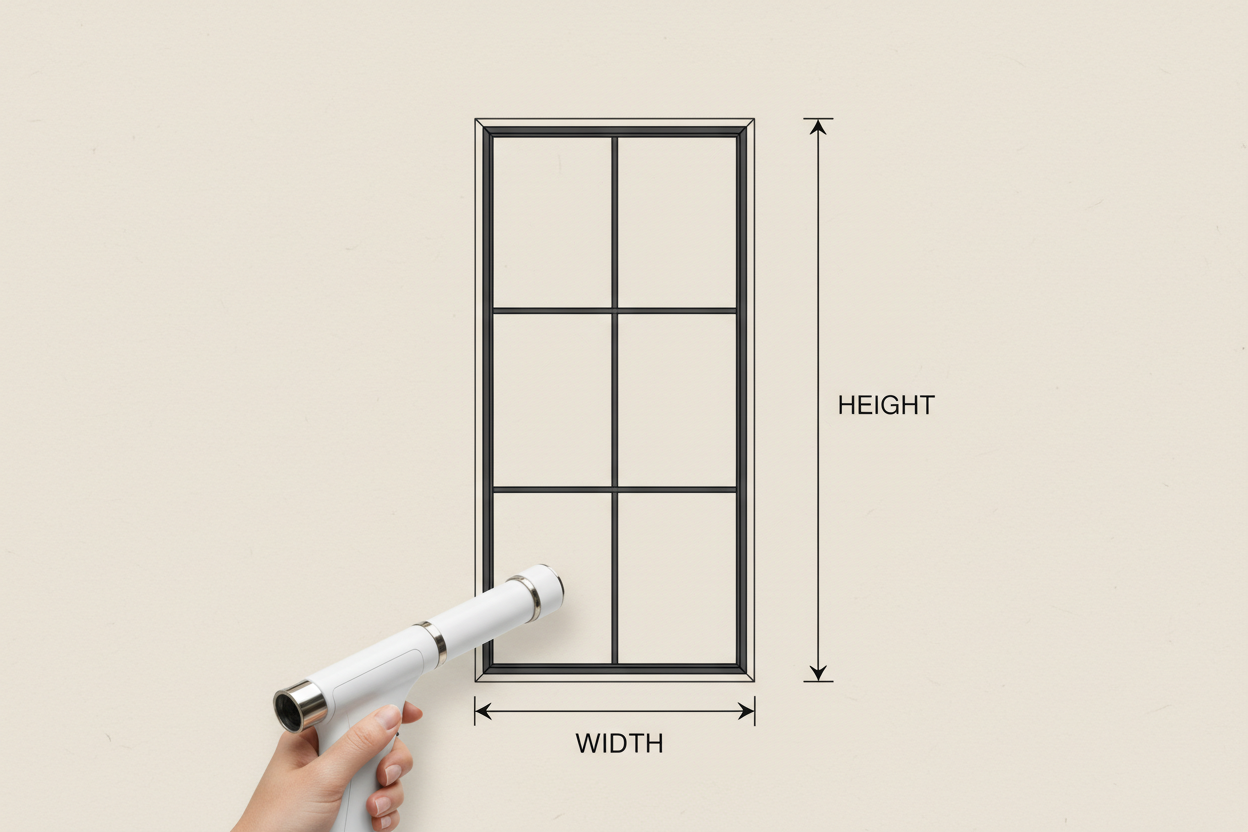
Step 1: Measure your window width
Note the width of the glass or frame you want to cover.
Step 2: Decide on rod placement
Extend your rod beyond the window frame on each side. A common recommendation is to extend 15–20cm per side as a minimum — but if you want the curtains to clear the window entirely when open, you may need to extend further to accommodate the full stack back.
Step 3: Calculate total rod length
Total rod length = window width + stack back (left) + stack back (right) + any overlap in the centre
Step 4: Confirm with your curtain supplier
Share your fabric choice and fullness ratio with your supplier. They can give you an accurate stack back figure before you order.
Stack Back and Room Layout
In rooms where wall space beside the window is limited — due to furniture, built-ins, or adjacent walls — stack back becomes even more critical to plan carefully. In these situations, consider:
- Choosing a lighter fabric with less bulk
- Reducing fullness slightly (e.g., from 2.5× to 2×)
- Using a track system that allows the curtain to stack more compactly
- Opting for a single panel that stacks to one side only
Stack Back at Tessivra
When you order from Tessivra, we factor stack back into our recommendations from the start. Our team will advise on the ideal rod width for your window and fabric combination, so your curtains frame the window beautifully — open or closed.
Getting stack back right is one of those details that separates a good installation from a truly polished one. Plan it carefully, and your windows will look their best every single day.

Leave a comment
This site is protected by hCaptcha and the hCaptcha Privacy Policy and Terms of Service apply.