
Why the Rod Matters
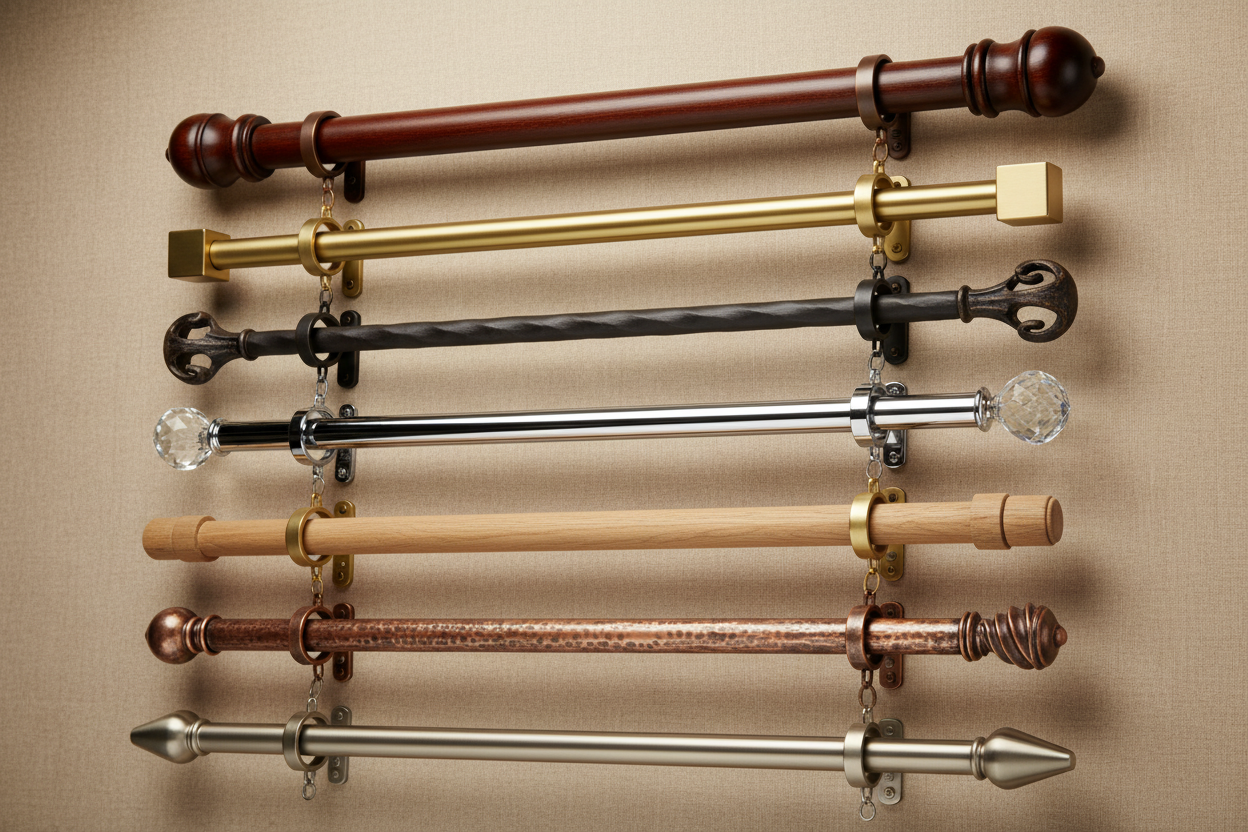
The curtain rod is more than just a functional support — it's a visible part of your window treatment. The right rod complements your curtains and interior style; the wrong one can undermine even the most beautiful fabric. Understanding the main rod types will help you make a confident choice.
The Main Types of Curtain Rods
1. Standard Decorative Rod
A single rod with decorative finials at each end, supported by brackets fixed to the wall. This is the most common type and works with most header styles including eyelet, tab top, and rod pocket.
- Best for: Eyelet, tab top, rod pocket curtains
- Materials: Metal (brass, chrome, matte black, brushed nickel), wood
- Diameter: Typically 19mm, 25mm, or 28mm
- Note: Not suitable for pinch pleat or pencil pleat without adding rings
2. Rod with Rings
A decorative rod paired with curtain rings that clip or hook onto the curtain header. This combination works with virtually any header style, including pinch pleat and pencil pleat.
- Best for: Pinch pleat, pencil pleat, and any curtain using hooks
- Advantage: Curtains slide smoothly and are easy to remove for cleaning
- Note: Ring diameter must be compatible with rod diameter
3. Curtain Track
A flat, wall- or ceiling-mounted track system with gliders that the curtain hooks slide into. Tracks are less decorative but highly functional — they allow smooth, quiet operation and can be bent to follow bay windows or curved walls.
- Best for: Pinch pleat, pencil pleat, and any hook-hung curtain
- Types: Hand-drawn track, cord-operated track, motorised track
- Advantage: Can be ceiling-mounted for a seamless, contemporary look; ideal for heavy curtains
- Note: Less visible than a rod — often concealed by a pelmet or valance
4. Double Rod
Two rods mounted on the same bracket set, one in front of the other. This allows you to hang two layers of curtains — typically a sheer panel at the back and a heavier curtain at the front.
- Best for: Layered window treatments (sheer + blackout, sheer + decorative)
- Advantage: Flexible light control without needing two separate rod systems
- Note: Requires deeper brackets to accommodate both rods
5. Tension Rod
A spring-loaded rod that fits inside a window recess without any fixings. Quick to install and leaves no marks on walls.
- Best for: Lightweight sheers, café curtains, rental properties
- Limitation: Not suitable for heavy curtains; can slip over time
6. Ceiling-Mounted Track
A track fixed directly to the ceiling rather than the wall. This creates a dramatic floor-to-ceiling effect and is particularly effective in rooms with high ceilings or where wall space above the window is limited.
- Best for: Contemporary interiors, high ceilings, room dividers
- Advantage: Makes ceilings feel higher; very clean, architectural look
Choosing the Right Rod for Your Curtains
| Header Style | Compatible Rod Types |
|---|---|
| Eyelet / Grommet | Standard decorative rod |
| Tab Top | Standard decorative rod |
| Rod Pocket | Standard decorative rod |
| Pinch Pleat | Rod with rings, curtain track |
| Pencil Pleat | Rod with rings, curtain track |
| Inverted Box Pleat | Rod with rings, curtain track |
Rod Diameter and Weight Capacity
Heavier curtains require sturdier rods. As a general guide:
- 19mm rods: Suitable for lightweight to medium curtains
- 25mm rods: Suitable for medium to heavy curtains
- 28mm+ rods: Suitable for heavy curtains, velvet, interlined panels
Always check the weight capacity of your rod and brackets before ordering, especially for wide windows where the rod spans a long distance without a centre support.
Finish and Style
Rod finish should complement your hardware and interior palette. Popular choices include:
- Matte black: Contemporary, graphic, works with most colour schemes
- Brushed brass / antique gold: Warm, luxurious, suits traditional and transitional interiors
- Brushed nickel / chrome: Cool, modern, pairs well with grey and white schemes
- Natural wood: Warm, organic, suits Scandinavian and earthy interiors
A Note on Bracket Placement
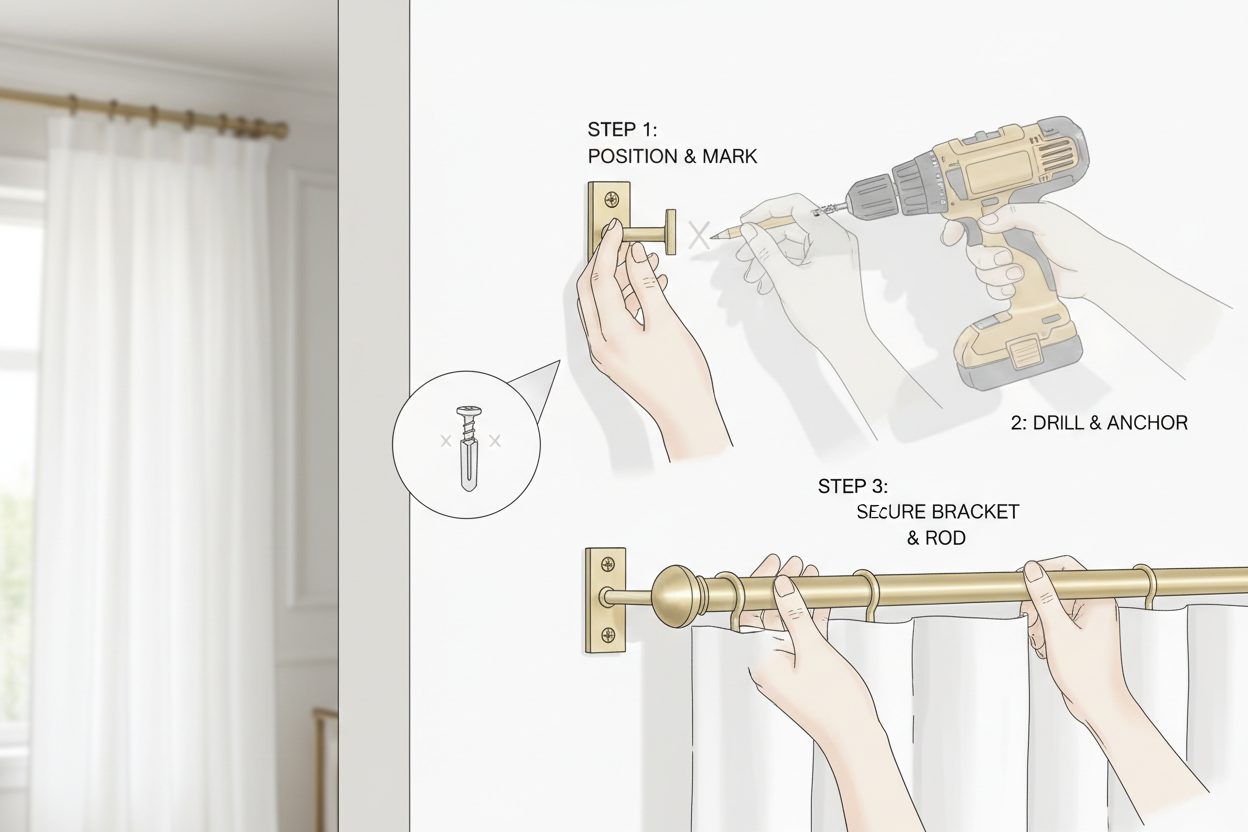
The number and placement of brackets affects both the look and stability of your installation. For rods over 150cm, a centre support bracket is strongly recommended to prevent sagging. See our Bracket Placement Guide for full details.

Leave a comment
This site is protected by hCaptcha and the hCaptcha Privacy Policy and Terms of Service apply.