
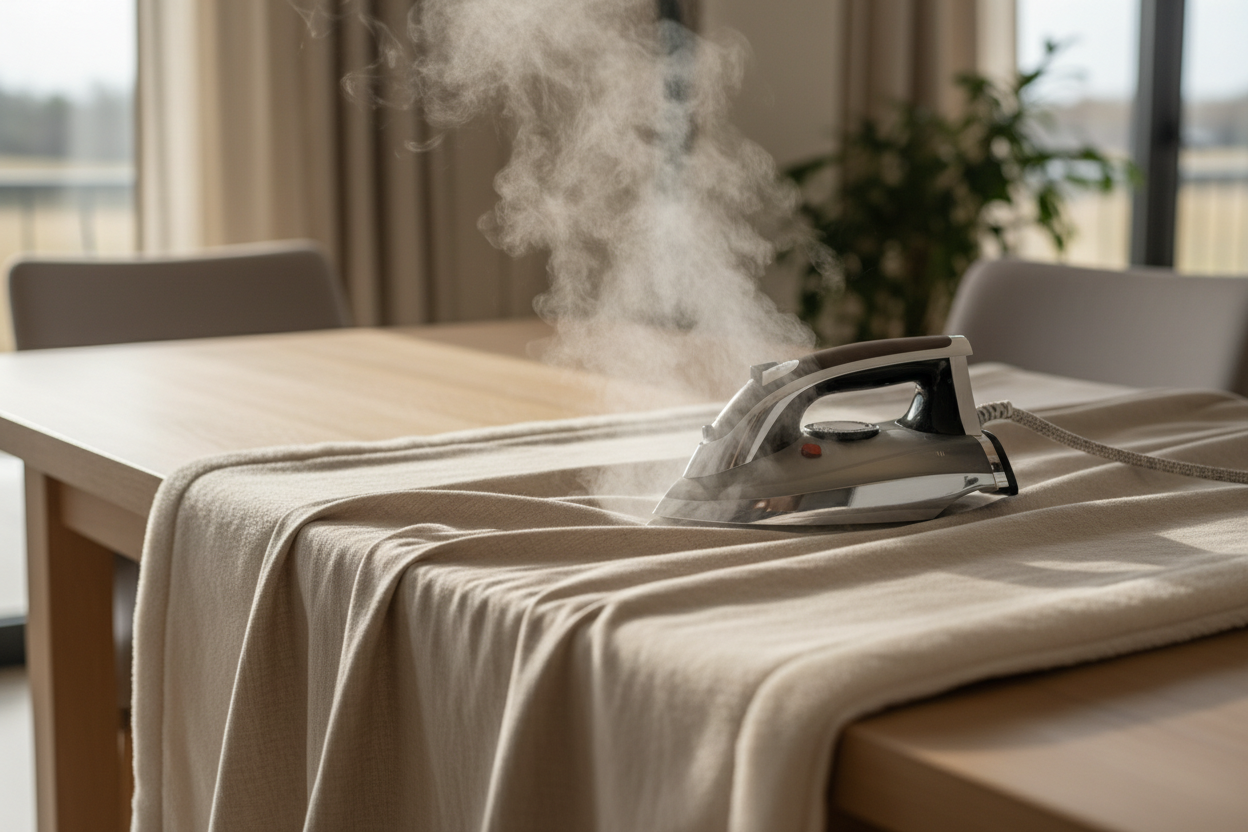
Do Curtains Need Ironing?
Not always — but when they do, doing it correctly makes a significant difference. Freshly ironed curtains hang more elegantly, look more polished, and make the whole room feel more considered. The key is knowing which fabrics can be ironed, at what temperature, and when steaming is a better option.
The Golden Rule: Check the Care Label First
Every curtain fabric has a maximum safe ironing temperature. Exceeding it can scorch, melt, or permanently mark the fabric. Always check the care label before applying heat, and when in doubt, start with the lowest setting and work up.
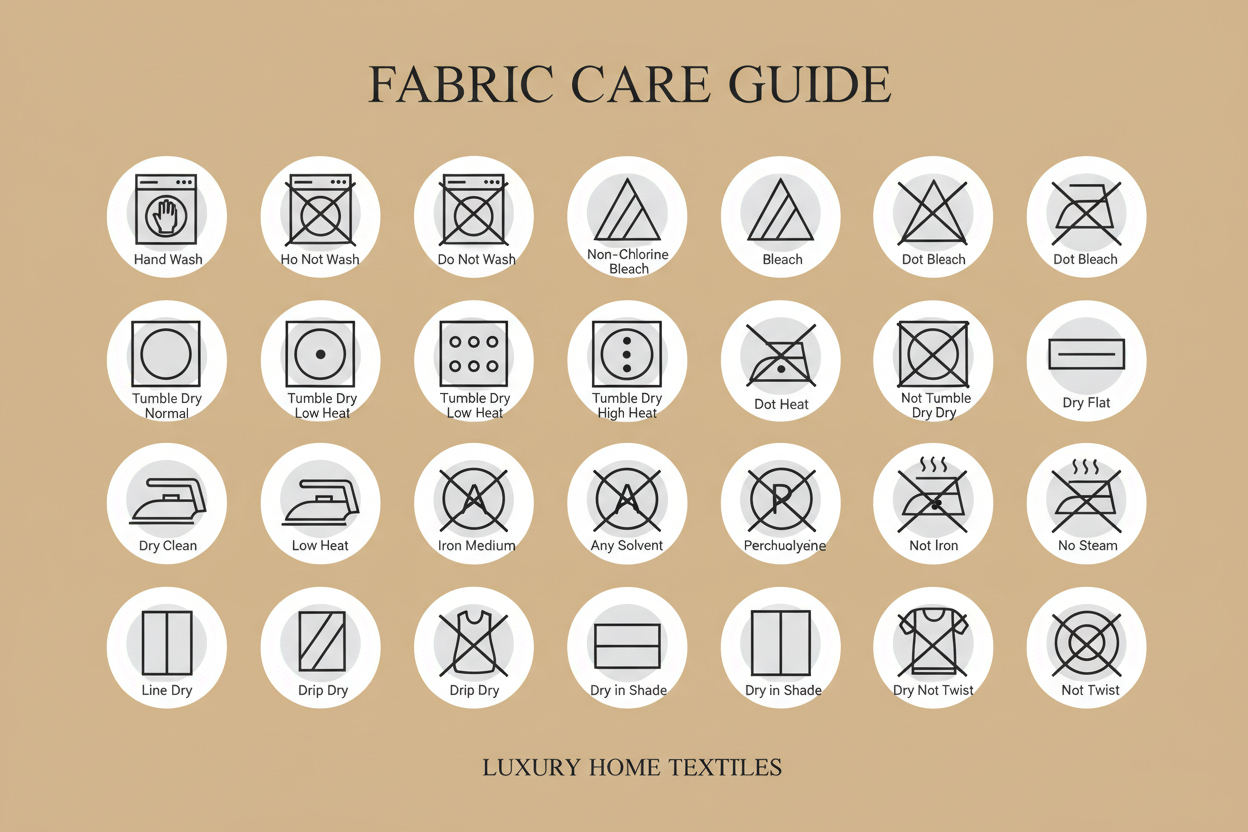
Care label symbols for ironing:
- One dot = low heat (up to 110°C) — synthetics
- Two dots = medium heat (up to 150°C) — wool, polyester blends
- Three dots = high heat (up to 200°C) — cotton, linen
- Iron with cross = do not iron
Ironing by Fabric Type
Linen
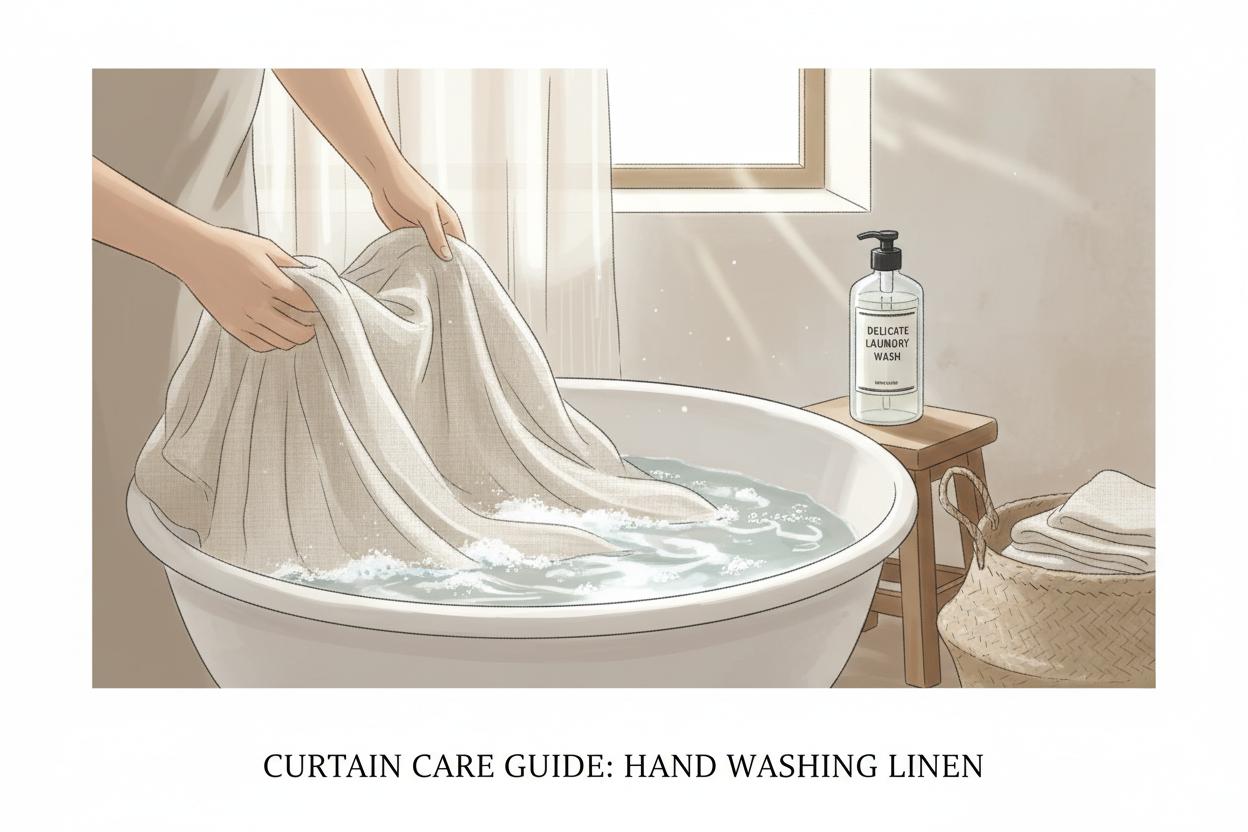
Linen wrinkles easily but irons beautifully. It responds best to heat and moisture.
- Temperature: High (200°C / three dots)
- Method: Iron while slightly damp, or use a steam iron. Iron on the reverse side to avoid shine.
- Tip: Rehang immediately after ironing — linen re-wrinkles quickly if left folded
Cotton
Cotton is straightforward to iron and tolerates high heat well.
- Temperature: Medium-high (150–200°C)
- Method: Iron while slightly damp or use steam. Iron on the reverse side for a matte finish.
- Tip: For sheers or lightweight cotton, use a pressing cloth to prevent shine
Velvet
Velvet should never be ironed directly — the iron will crush the pile permanently.
- Temperature: Do not iron directly
- Method: Use a handheld steamer held 5–10cm from the fabric. Move the steamer in the direction of the pile. Alternatively, hang in a steamy bathroom to release wrinkles.
- Tip: If you must press velvet, place it pile-down on a velvet pressing board and use a very light touch with a cool iron on the reverse
Silk
Silk is delicate and can water-spot or scorch easily.
- Temperature: Low (110°C / one dot)
- Method: Iron on the reverse side while slightly damp, using a pressing cloth. Never use steam directly on silk — it can cause water marks.
- Tip: If in doubt, use a steamer at a distance rather than a direct iron
Polyester / Synthetic Blends
Synthetics are sensitive to heat and can melt or develop a permanent shine if ironed too hot.
- Temperature: Low (110°C / one dot)
- Method: Iron on the reverse side with a pressing cloth. Use steam sparingly.
- Tip: Steaming is often preferable to ironing for synthetics
Sheer / Voile
Sheers are delicate and can be damaged by direct heat.
- Temperature: Very low, or steam only
- Method: Use a cool iron on the reverse side, or hang while damp and allow to dry naturally — sheers often drop out wrinkles on their own
- Tip: Rehanging while slightly damp is usually sufficient for most sheer fabrics
Steaming vs. Ironing
For many curtain fabrics — particularly velvet, silk, and synthetics — a handheld garment steamer is safer and more effective than a traditional iron. Steaming:
- Relaxes fibres without direct pressure, reducing the risk of crushing or marking
- Works on curtains while they're hanging, saving time and effort
- Is gentler on delicate fabrics and linings
- Refreshes curtains between washes
If you don't own a steamer, hanging curtains in a bathroom while running a hot shower achieves a similar effect for light wrinkles.
Practical Tips for Ironing Curtains
- Iron in sections: Work from top to bottom, section by section, to avoid re-wrinkling areas you've already done
- Use a long ironing board or table: Curtains are large — a standard ironing board works but a larger surface makes the job easier
- Iron the lining separately: For lined curtains, iron the lining and face fabric separately if possible, working from the lining side
- Rehang immediately: Don't fold ironed curtains — hang them straight away so gravity keeps them smooth
- Work with the grain: Always iron in the direction of the weave, not across it
When Not to Iron
Some curtains are designed to have a relaxed, lived-in look — particularly linen and cotton in casual or Scandinavian-style interiors. Over-ironing these can make them look stiff and unnatural. A light steam and a gentle hand-press is often all that's needed.
And for velvet, silk, and heavily embellished curtains: when in doubt, leave it to a professional.

Leave a comment
This site is protected by hCaptcha and the hCaptcha Privacy Policy and Terms of Service apply.